Traditionally Hand forged Japanese swords. Swords forged in strict adherence to Japanese tradition.
About Me:
Many years have passed since I started on the path to make Japanese style swords. It began with my studies of the language and culture, which in turn deepened my interest in both the culture and the sword, as my studies revealed that both were deeply intertwined. While continuing my literary studies, I thought that some insight into the physical usage of the sword would complement my overall understanding. Therfore, I began to study some sword arts including kendo. While continuing with these studies, I began to switch my emphasis to a growing interest in traditional forging methods of Japanese swords. The Japanese sword is very complex and unique with many important facets. Some of these are: the sugata(shape); the jigane with its integral surface pattern or jihada (the composition and appearance of the steel, and the resulting visible surface pattern or jihada left by repeatedly folding and forging the steel); and the hamon (the pattern of the hardened edge). Constructing each aspect of the sword presented a mountain of challenges, and it took years to understand and forge a sword correctly. Learning the proper technique has required years of work, and there is always more to learn and master. However, finally, with the help and guidance of some of the most knowledgeable and skilled Japanese swordsmith and craftsman in the world, my years of hard work have lead to very satisfying results. I am continuing to work very hard to produce Bizen style choji midare hamon. My extensive research and work with traditional Japanese steel has enabled me to produce a rich and beautiful jigane. Likewise, I continue to strive to be able to create jigane which similar to what is seen from the koto period.
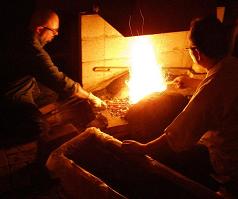
A lifelong interest comes together and a path forms..... 1993: First trip to Japan. Upon my return, the path to forging swords begins 2005: Traveled to Japan to visit a prominent swordsmith in order to observe and learn traditional Japanese foundation forging and to study and understand the process of making tamahagane (traditional Japanese steel smelted from iron bearing sand). 2005: I was honored to have one of my katana on exhibit in the Macao Museum of Art "Masters of Fire Exhibition". 2006: Further deepened my understanding of traditional methods and materials. This included extensive research into tamahagane. 2007: Received mentoring and guidance from Leon Kapp who is greatly responsible for my renewed interest and work with Bizen style sword. Begin observing and working with world reknown Master Smith Yoshindo Yoshihara. 2008: Continued to recieve instruction from Yoshindo Yoshihara (designated Mukei Bunkazai or Important Intangible Cultural Asset by the Japanese Government) to further my understanding in the areas of tsuchioki and yakiire, among other things, and to gain additional insights and a better understanding of the hamon seen in Bizen swords, most particularly choji midare. 2008: Tanto dedicated to Japanese Shinto shrine, Tsubaki Grand Shrine of America.
To all that have helped me, I am forever grateful. Thank you.
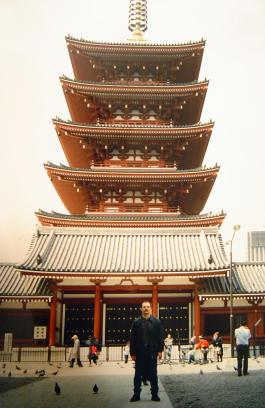
Tokyo 1993
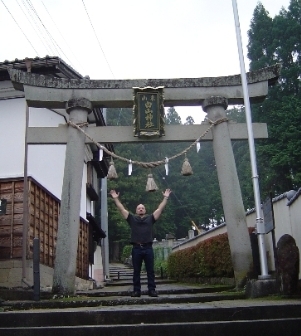
2005
shinsakuto, shinsakuto, japanese knives, custom knives, custom, knives, custom japanese swords, japanese knives, nihonto.